-
Skyzenith
- March 21, 2026
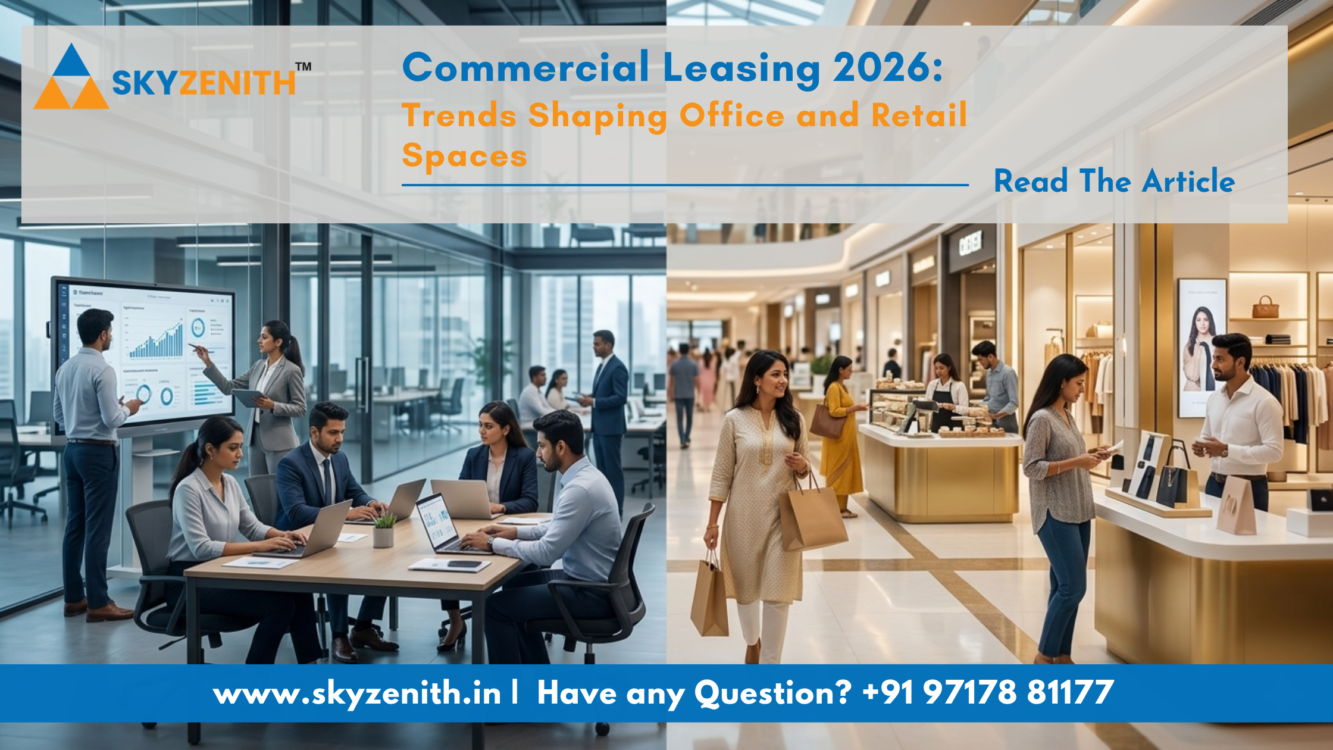
Commercial Leasing 2026: Trends Shaping Office and Retail Spaces
The landscape of commercial real estate is undergoing a transformation unlike any seen in decades. Gone are the days when a simple lease agreement and a prime location were sufficient to guarantee success. In 2026, the very definition of what constitutes a desirable office or retail space has been rewritten by shifting work patterns, evolving consumer behaviors, and an unrelenting demand for experiential environments. For businesses seeking to establish or expand their physical footprint, understanding these emerging trends is not merely advantageous, it is essential for survival. This exploration delves into the forces reshaping commercial leasing, offering a roadmap for navigating a market defined by innovation, flexibility, and strategic foresight.
The Evolution of Office Spaces: From Cubicles to Ecosystems
The traditional office, a collection of assigned desks, enclosed cabins, and fluorescent lighting, has become a relic of a bygone era. The post-pandemic world has ushered in a fundamental reassessment of why physical workplaces exist at all. Organizations no longer view office spaces as mere containers for work; they see them as strategic tools for culture building, collaboration, and talent retention.
In 2026, the most sought-after office spaces are those designed around hybrid work models. This shift is reflected in leasing preferences, with businesses gravitating toward spaces that offer a blend of private focus rooms, collaborative zones, and social amenities. The concept of the “office as a destination” has taken hold, where employees choose to come to the workplace not because they must, but because the environment offers something superior to their home office: seamless technology, opportunities for spontaneous interaction, and a sense of community.
This evolution has profound implications for commercial leasing. Tenants are increasingly seeking shorter lease terms with greater flexibility, allowing them to scale space up or down as their workforce needs fluctuate. Landlords who recognize this demand are reimagining their properties, investing in amenities such as wellness rooms, outdoor terraces, and high-quality food and beverage offerings. The leasing transaction itself has become more collaborative, with negotiations focusing less on rigid square footage and more on dynamic, service-inclusive arrangements that align with the fluid nature of modern work.
The Retail Renaissance: Experience Over Transactions
If office spaces are being redefined by how people work, retail spaces are being reinvented by how people shop. The rise of e-commerce has permanently altered consumer expectations, rendering traditional “brick-and-mortar” retail models, those focused solely on transactions, increasingly obsolete. In their place has emerged a retail renaissance centered on experience, discovery, and emotional connection.
The retail spaces commanding premium leases in 2026 are those that offer something the digital realm cannot replicate. This includes immersive brand experiences, curated product assortments, and environments designed for social interaction. Flagship stores have evolved into brand showcases, where customers come to engage with a brand’s identity rather than merely to complete a purchase. Pop-up concepts, once considered ephemeral, have become a mainstream strategy, allowing retailers to test new markets, create buzz, and maintain a sense of novelty and exclusivity.
For landlords and tenants alike, this shift demands a new approach to leasing. The focus has moved from maximizing tenant density to curating a complementary mix of uses. A successful retail development in 2026 is as likely to feature a fitness studio, a art gallery, or a specialty coffee roaster alongside traditional retailers. The goal is to create a destination, a place people want to visit, linger, and return to, rather than a collection of independent shops.
Sustainability as a Leasing Imperative
No discussion of commercial leasing in 2026 would be complete without addressing the growing centrality of environmental, social, and governance considerations. Sustainability is no longer a niche concern; it has become a core requirement for businesses across sectors. For tenants, occupying a space with strong environmental credentials aligns with corporate values, supports employee attraction and retention, and increasingly influences investor sentiment.
In practice, this means that energy efficiency, water conservation, waste management, and indoor environmental quality are now standard points of discussion during lease negotiations. Tenants are seeking buildings with recognized certifications, robust green building features, and transparent reporting on energy consumption and carbon emissions. Landlords who have invested in retrofitting older properties or developing new assets to meet these standards are finding themselves with a distinct competitive advantage in attracting high-quality tenants.
This trend extends beyond the physical building to encompass the entire leasing experience. Prospective tenants are conducting due diligence on a property’s sustainability performance with the same rigor applied to financial terms. The lease itself is evolving, with clauses increasingly addressing shared responsibilities for achieving environmental targets, tracking utility usage, and collaborating on sustainability initiatives.
Technology-Enabled Spaces: The Rise of Smart Buildings
The commercial spaces of 2026 are not merely physical structures; they are intelligent platforms. The integration of technology into building infrastructure has transformed how spaces are managed, utilized, and experienced. From sensor-based occupancy monitoring that optimizes energy use to mobile applications that allow tenants to book amenities and manage access, technology is creating a new standard for convenience and operational efficiency.
For businesses considering a lease, the technological capabilities of a building are now a critical factor. Tenants expect robust connectivity, redundant power systems, and the infrastructure to support advanced audio-visual and security systems. More importantly, they seek spaces that offer data-driven insights, information on space utilization, environmental conditions, and occupant behavior that can inform strategic decisions about workplace design and resource allocation.
This technological layer also enables the flexibility that modern businesses demand. Smart building systems facilitate seamless reconfiguration of spaces, allowing tenants to adapt to changing needs without costly construction. For landlords, these technologies provide the ability to deliver a superior tenant experience while optimizing operational costs, a win-win that is reshaping the economics of commercial real estate.
The Rise of Mixed-Use and Community-Centric Developments
One of the most significant trends shaping commercial leasing in 2026 is the convergence of office, retail, residential, and hospitality uses within integrated developments. The traditional silos that separated where people live, work, shop, and socialize are dissolving. In their place are mixed-use environments that offer convenience, vibrancy, and a sense of community.
For office tenants, locating within a mixed-use development provides immediate access to amenities that enhance employee experience, dining, fitness, childcare, and retail, all within walking distance. For retail tenants, being part of such an ecosystem provides a built-in customer base and extended foot traffic beyond traditional shopping hours. This symbiotic relationship creates value that exceeds what any individual use could achieve in isolation.
From a leasing perspective, mixed-use properties require a more sophisticated approach. Successful developments are those where the leasing strategy curates a balance of uses that complement and reinforce one another. The result is a dynamic environment that attracts people throughout the day and evening, creating the kind of urban vitality that defines the most desirable locations.
A Strategic Approach to Commercial Leasing
Navigating the complexities of commercial leasing in 2026 requires more than transactional expertise; it demands strategic partnership. Businesses seeking space must look beyond rent and square footage to consider how a property aligns with their operational needs, brand identity, and long-term vision. This involves evaluating the building’s flexibility, its technological infrastructure, its sustainability credentials, and its role within the broader community context.
For those embarking on this journey, partnering with experienced professionals who understand the nuances of the current market is invaluable. SkyZenith offers comprehensive commercial leasing services designed to guide businesses through every stage of the process. With a deep understanding of the evolving dynamics of office and retail spaces, SkyZenith assists clients in identifying properties that align with their strategic objectives, negotiating favorable terms, and ensuring that the space they secure is positioned for success in an ever-changing environment. Their expertise spans the full spectrum of commercial real estate, from site selection and lease negotiation to ongoing portfolio management, providing clients with the confidence and clarity needed to make informed decisions.
Conclusion
The world of commercial leasing has entered a new era, defined by flexibility, experience, sustainability, and technology. For businesses willing to embrace these trends, the opportunities are significant. By understanding the forces reshaping office and retail spaces, and by approaching leasing as a strategic endeavor rather than a mere transaction, organizations can secure spaces that not only meet their current needs but also position them for sustained growth. The spaces we occupy shape how we work, shop, and connect and in 2026, the choices made in commercial leasing have never mattered more.