-
Skyzenith
- March 12, 2026
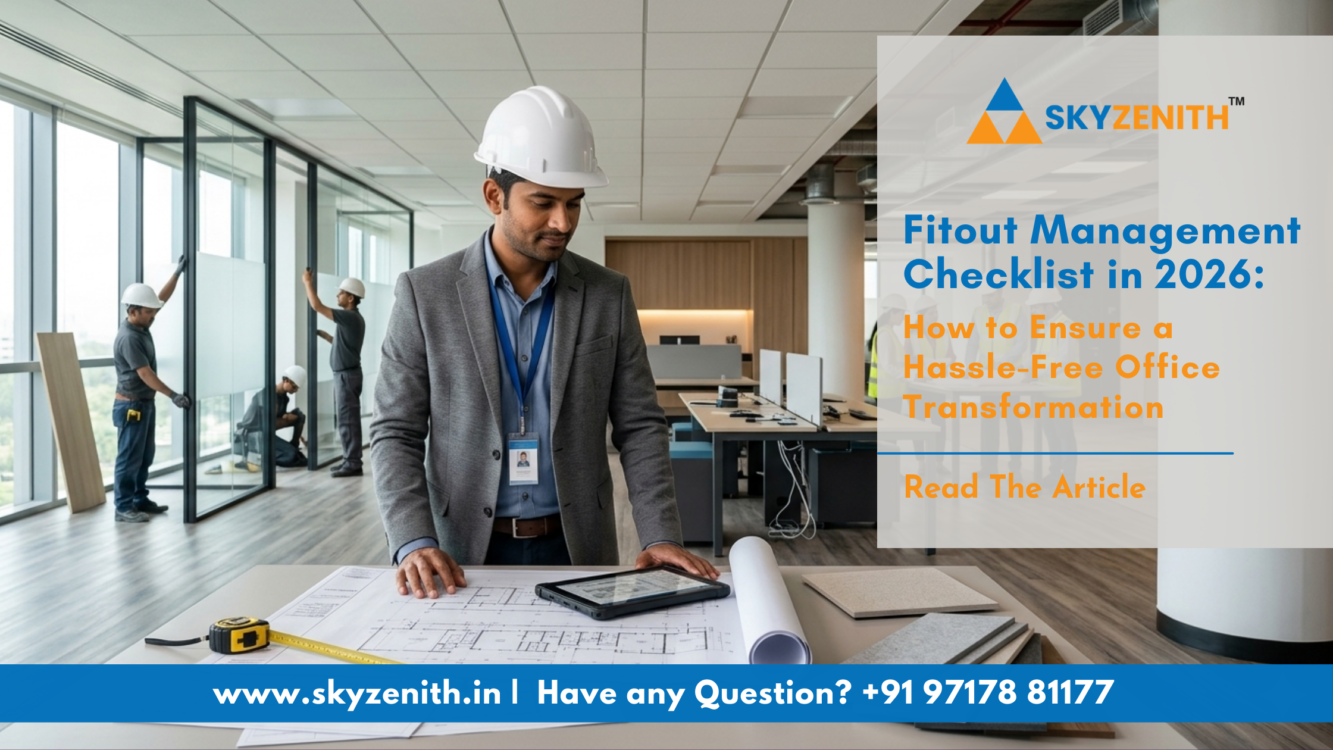
Fitout Management Checklist in 2026: How to Ensure a Hassle-Free Office Transformation
The modern workplace is evolving rapidly. As businesses adapt to hybrid work models, advanced technologies, and changing employee expectations, the demand for efficient and well-designed office environments has increased significantly. Office fitouts are no longer limited to aesthetic upgrades; they have become strategic projects that influence productivity, employee well-being, and brand identity.
In 2026, organizations planning office transformations must focus on structured fitout management, ensuring that every stage from planning to execution is handled with precision. A well-organized fitout management checklist can help businesses avoid costly delays, regulatory issues, and operational disruptions.
This guide explores how companies can implement a systematic approach to office fitout management, ensuring a smooth and hassle-free transformation while maintaining efficiency and compliance.
Understanding Office Fitout Management in Modern Workspaces
Office fitout management refers to the process of designing, planning, and implementing interior workspace modifications that align with organizational goals and operational needs. A successful fitout goes beyond installing furniture and décor. It involves careful coordination of space planning, infrastructure development, compliance checks, and facility integration.
Businesses in major commercial hubs such as Gurgaon, Bengaluru, and Mumbai are increasingly adopting smart office fitouts that incorporate sustainability, ergonomic design, and technology-driven infrastructure.
Without structured planning, however, office transformation projects may face challenges such as budget overruns, project delays, or disruption to business operations. This is why companies rely on a fitout management checklist to guide the entire process.
The Importance of a Structured Fitout Management Checklist
A fitout management checklist acts as a roadmap for project managers, facility teams, and corporate decision-makers. It ensures that all critical elements of office transformation are addressed before implementation begins.
A comprehensive checklist offers several advantages:
- Ensures clear planning and budgeting for office transformation projects
- Helps maintain compliance with building regulations and safety standards
- Reduces project delays and construction conflicts
- Improves communication between stakeholders, vendors, and contractors
- Enhances workplace functionality and long-term operational efficiency
By following a well-defined checklist, organizations can transition into their new workspace with minimal disruption.
Step 1: Strategic Planning and Workspace Assessment
Every successful office fitout begins with a detailed evaluation of the existing workspace and the organization’s future requirements.
Key considerations during this stage include:
- Current office layout and space utilization
- Number of employees and projected workforce growth
- Departmental collaboration needs
- Technology and infrastructure requirements
- Employee comfort and productivity factors
Companies should also assess how the workspace aligns with the organization’s brand identity and workplace culture.
Modern office environments in 2026 emphasize open collaboration zones, quiet focus areas, flexible meeting rooms, and wellness spaces. Strategic planning ensures these elements are integrated effectively into the design.
Step 2: Budget Planning and Cost Management
Budget planning plays a crucial role in successful fitout management. Without proper financial planning, office transformation projects can quickly exceed their initial estimates.
A realistic fitout budget should include:
- Design and architectural planning costs
- Construction and installation expenses
- Furniture and workstation investments
- Electrical and data infrastructure upgrades
- HVAC system adjustments
- Compliance inspections and certifications
Organizations should also allocate contingency funds to handle unexpected construction or design modifications.
Effective cost management ensures that the office transformation remains financially sustainable while achieving the desired design and functionality goals.
Step 3: Design Development and Space Optimization
The design phase is where the vision of the office transformation begins to take shape. A well-designed workspace balances aesthetics with functionality.
Modern office fitout design trends in 2026 include:
- Flexible modular workstations
- Smart meeting rooms with integrated technology
- Biophilic design elements such as indoor plants and natural light
- Acoustic solutions to reduce noise in open offices
- Energy-efficient lighting and sustainable materials
Space optimization is particularly important in urban commercial properties where real estate costs are high. Efficient design allows businesses to maximize workspace utilization while maintaining comfort and accessibility.
Step 4: Regulatory Compliance and Safety Approvals
Before construction begins, it is essential to ensure that the fitout project complies with local building regulations and safety standards.
Compliance requirements may include:
- Fire safety approvals and emergency exit planning
- Electrical safety certifications
- HVAC ventilation standards
- Structural load assessments
- Accessibility requirements
Ignoring regulatory approvals can result in delays, penalties, or operational restrictions. Professional fitout management teams ensure that all compliance requirements are addressed before implementation begins.
Step 5: Vendor Coordination and Project Scheduling
Office fitout projects typically involve multiple vendors, including architects, contractors, electricians, furniture suppliers, and technology providers.
Effective vendor coordination ensures that these teams work together seamlessly.
Important aspects of project coordination include:
- Clear project timelines and milestone planning
- Defined roles and responsibilities for contractors
- Regular progress reviews and site inspections
- Coordination of construction activities with ongoing business operations
A structured project schedule minimizes disruptions and helps organizations maintain business continuity during the transformation process.
Step 6: Infrastructure and Technology Integration
Modern workplaces rely heavily on technology infrastructure. During office fitout projects, organizations must ensure that the workspace supports digital connectivity and smart office solutions.
Key technology considerations include:
- High-speed internet infrastructure
- Structured cabling systems
- Video conferencing facilities
- Smart lighting and climate control systems
- Security and surveillance systems
Technology integration should be planned early in the fitout process to avoid costly retrofitting later.
Step 7: Quality Control and Final Inspection
Before the office transformation is completed, a detailed inspection should be conducted to ensure that all installations meet design specifications and safety standards.
Quality control checks should include:
- Structural integrity of partitions and workstations
- Electrical wiring and power systems
- HVAC functionality and air circulation
- Lighting efficiency and workspace visibility
- Furniture installation and ergonomic compliance
Final inspections ensure that the office environment is fully operational and ready for occupancy.
Step 8: Employee Transition and Workspace Activation
The final step of the office transformation process involves transitioning employees into the new workspace.
Organizations should communicate clearly with employees about:
- New office layout and workstation arrangements
- Shared facilities and meeting room usage
- Health and safety guidelines within the workspace
- Technology tools available in the new office environment
A well-managed transition allows employees to adapt quickly and take full advantage of the improved workplace environment.
The Future of Office Fitout Management
As businesses move toward flexible work environments and digital collaboration, office fitouts will continue to evolve. Organizations in 2026 are focusing on sustainability, employee well-being, and intelligent workplace design.
Green building materials, energy-efficient systems, and adaptable workspace layouts are becoming essential components of modern office transformation projects.
Companies that approach fitout management strategically can create workplaces that inspire productivity, support innovation, and reflect their corporate identity.
SkyZenith provides specialized fitout management and corporate real estate advisory services designed to support organizations throughout their workspace transformation journey. From initial planning and design coordination to vendor management and project execution, the company offers comprehensive solutions that ensure smooth and efficient office fitouts. With strong expertise in commercial real estate strategy, workplace planning, and project management, SkyZenith helps businesses create functional, modern, and sustainable office environments that align with operational goals and future growth.
Email: Hemraj.dabur@skyzenith.in
Phone: +91 97178 81177