-
Skyzenith
- May 27, 2026
Building Audits in 2026: Why Compliance and Efficiency Matter More Than Ever
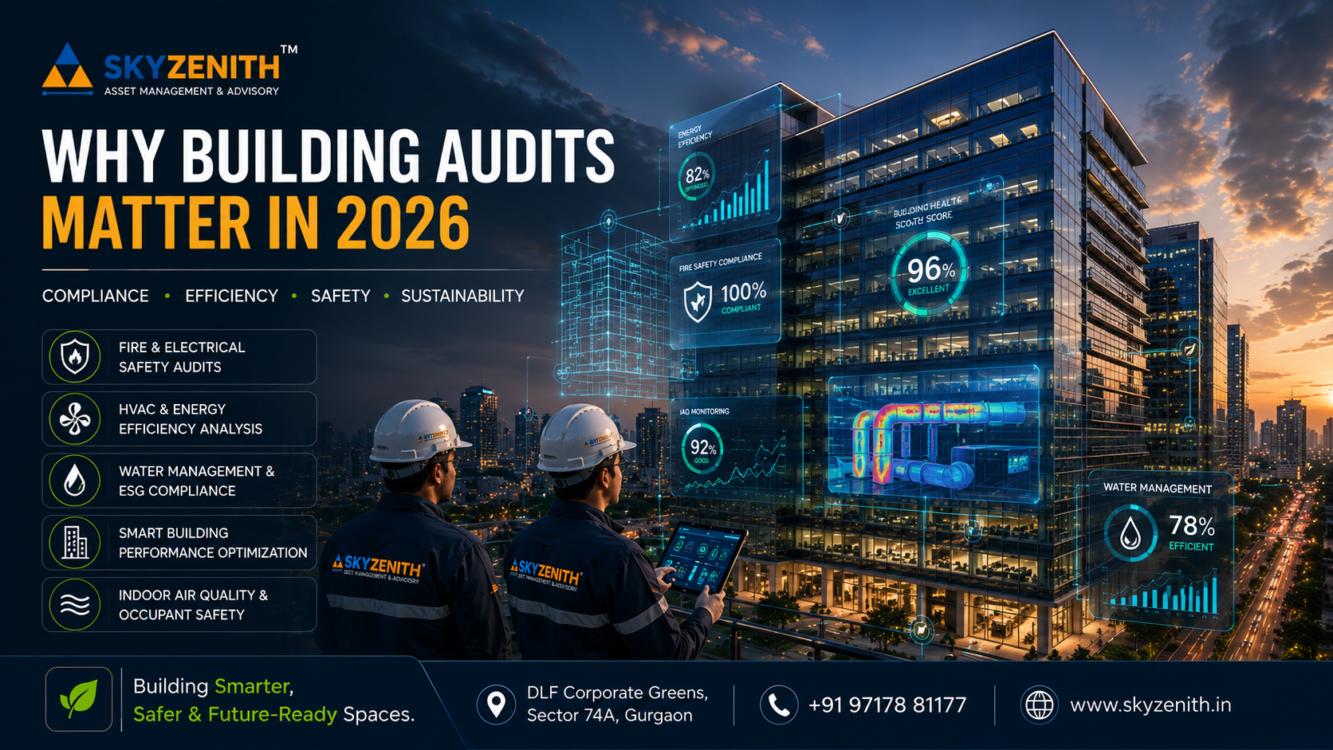
The skyline of urban India is undergoing a profound transformation. Towering glass-and-steel structures now define our metropolitan landscapes, housing everything from multinational corporations to critical healthcare facilities. Yet beneath the gleaming facades lies a silent challenge that has come to define the real estate and facility management discourse of 2026: the urgent need for comprehensive building audits. What was once considered an optional exercise has become an operational necessity, driven by tightening regulatory frameworks, escalating energy costs, and a global push toward sustainable infrastructure. As we navigate this pivotal year, building audits have emerged as the cornerstone of responsible property management, safeguarding both compliance and efficiency in equal measure.
The Evolving Regulatory Landscape: Why Compliance Is No Longer Optional
The year 2026 marks a significant inflection point in India’s building compliance ecosystem. Following the amendments to the Energy Conservation Act and the widespread adoption of State Building Codes, regulatory authorities have begun enforcing stricter provisions with unprecedented rigour. The Bureau of Energy Efficiency has intensified its oversight, mandating regular energy audits for commercial buildings with connected loads exceeding specific thresholds. Simultaneously, fire safety regulations have been overhauled in response to tragic incidents across the country, requiring property owners to submit verified audit reports at six‑month intervals. Municipal corporations in major cities now have the authority to levy substantial penalties and in extreme cases, order temporary closures for non‑compliance.
For building owners and facility managers, this translates into a clear reality: periodic building audits are no longer a recommendation but a statutory requirement. A comprehensive building audit evaluates multiple parameters, including electrical safety, structural integrity, fire suppression systems, water efficiency, indoor air quality, and energy consumption patterns. Failing to meet these standards not only invites legal repercussions but also damages reputation, reduces asset value, and increases liability in the event of accidents. In 2026, compliance through rigorous auditing is the only path forward for responsible stakeholders.
The Efficiency Imperative: Unlocking Hidden Savings Through Systematic Assessment
Beyond the pressing demands of regulation, building audits in 2026 have evolved into powerful tools for operational optimisation. With commercial electricity tariffs rising steadily and businesses under constant pressure to reduce overheads, inefficient building systems represent a drain on profitability that can no longer be ignored. A thorough building audit identifies exactly where energy, water, and other resources are being wasted often in places that go unnoticed during routine operations.
Consider the case of a typical commercial tower in Gurgaon. Without regular audits, heating, ventilation, and air conditioning systems may operate with clogged filters, leaking ducts, or outdated controls, consuming up to thirty percent more energy than necessary. Lighting systems designed a decade ago may still rely on inefficient fixtures, while water distribution networks may hide leaks that waste thousands of litres daily. An independent, methodical building audit uncovers these inefficiencies with data‑driven precision, enabling facility managers to prioritise repairs, upgrades, and behavioural changes that yield measurable returns. In many instances, the savings achieved within twelve months of implementing audit recommendations far exceed the cost of the audit itself.
What a Modern Building Audit Entails: From Structural Integrity to Smart Systems
The scope of building audits in 2026 has expanded considerably compared to earlier years. A professional audit now integrates traditional structural assessments with advanced diagnostic techniques and smart building analytics. The process typically begins with a document review, examining original building plans, maintenance logs, previous audit reports, and regulatory approvals. This is followed by a physical walkthrough during which qualified engineers inspect critical systems: electrical panels and wiring, fire alarms and sprinklers, plumbing networks, HVAC equipment, lifts and escalators, facade elements, and roofing systems.
What sets modern audits apart is the use of non‑invasive technology. Thermal imaging cameras detect hidden hotspots in electrical panels and insulation gaps in walls. Ultrasonic leak detectors pinpoint compressed air or refrigerant leaks without dismantling equipment. Data loggers monitor energy consumption patterns across different times of day, revealing anomalies that manual checks would miss. For larger campuses and mixed‑use developments, building audits also assess water harvesting structures, sewage treatment plants, and solar photovoltaic installations. The final deliverable is a comprehensive report that not only lists deficiencies but also provides a prioritised action plan, cost estimates for remediation, and projected payback periods.
The Human Factor: How Regular Audits Enhance Occupant Safety and Well‑Being
Compliance and efficiency, while critical, are not the only beneficiaries of rigorous building audits. In 2026, occupant health and safety have taken centre stage in facility management discourse. Poor indoor air quality, inadequate ventilation, mould growth from undetected moisture intrusion, and improperly maintained fire safety systems directly impact the well‑being of everyone who enters a building employees, residents, patients, students, or customers.
Studies conducted over the past five years have established clear links between building conditions and health outcomes. Office workers in poorly ventilated spaces report higher rates of respiratory complaints, fatigue, and absenteeism. Hospital patients in facilities with inadequate air filtration face increased risks of hospital‑acquired infections. Children in schools with ignored water leaks and mould develop allergies and asthma at elevated rates. Building audits in 2026 address these concerns methodically, measuring carbon dioxide levels, particulate matter concentrations, relative humidity, and surface moisture. By identifying and rectifying hazards before they cause harm, regular audits demonstrate a commitment to occupant welfare that transcends mere legal obligation.
A Roadmap to Resilience: Integrating Audit Findings into Long‑Term Asset Management
The true value of a building audit is realised not when the report is received but when its findings are translated into action. Leading property owners and facility management firms have shifted from a reactive audit‑then‑fix approach to a proactive, integrated asset management strategy. In this model, building audits serve as periodic checkpoints within a continuous improvement cycle. Audit findings are entered into digital dashboards that track remediation progress, flag overdue actions, and generate alerts for upcoming compliance deadlines.
For a commercial complex or a healthcare facility in the National Capital Region, this approach builds resilience over time. Repeated audits reveal patterns: a particular zone consistently showing higher electrical leakage, a fire pump that fails every eighteen months, a water cooling tower whose efficiency declines seasonally. Armed with this intelligence, facility managers can schedule preventive maintenance, negotiate better service contracts, and make capital investment decisions based on evidence rather than guesswork. In an era of climate‑induced weather extremes and fluctuating utility grids, a well‑audited building is a resilient building — one that continues to function safely and efficiently even under stress.
Conclusion: Making Building Audits a Cornerstone of Responsible Ownership
As 2026 unfolds, the message to building owners, facility managers, and real estate developers is unmistakably clear: building audits are no longer an afterthought but a strategic imperative. Regulatory bodies are watching more closely than ever, energy costs are rising, and occupant expectations for safety and comfort have never been higher. A comprehensive building audit addresses all three dimensions simultaneously ensuring legal compliance, unlocking operational savings, and protecting human health. Organisations that embed regular audits into their annual calendars, act decisively on findings, and partner with experienced audit professionals will distinguish themselves as leaders in responsible property management. In the competitive real estate markets of Mumbai, Gurgaon, Bengaluru, and beyond, such leadership translates directly into tenant retention, asset appreciation, and lasting reputation.
About SkyZenith
SkyZenith is a premier provider of comprehensive building audit and compliance solutions, dedicated to helping commercial, residential, and institutional clients optimise their assets for safety, efficiency, and regulatory adherence. With a team of certified engineers and fire safety experts, SkyZenith conducts end‑to‑end building assessments covering structural integrity, electrical systems, fire protection networks, HVAC performance, water management, and indoor environmental quality. Their unique value proposition lies in delivering actionable audit reports with prioritised recommendations, cost‑benefit analyses, and post‑audit implementation support. Serving clients across Gurgaon, Delhi NCR, and beyond, SkyZenith combines technical rigour with a client‑centric approach, ensuring that every building they assess becomes safer, more efficient, and fully compliant with the latest 2026 standards.
Address
Unit No. 908, 9th Floor, Tower 1
DLF Corporate Greens, Sector 74A
Sohna Road, Gurgaon, Haryana 122004
Email
Hemraj.dabur@skyzenith.in
Phone
+91 97178 81177