-
Skyzenith
- March 17, 2026
Workplace Strategy 2026: Designing Offices for Hybrid Work and Employee Wellness
The workplace has undergone one of the most significant transformations in modern corporate history. As organizations adapt to changing employee expectations and technological advancements, workplace strategy in 2026 is no longer limited to traditional office layouts. Instead, it focuses on creating intelligent, flexible, and human-centered environments that support hybrid work models and employee wellness.
Across global business hubs and rapidly developing commercial centers in India, organizations are reimagining office spaces to balance productivity, collaboration, and employee wellbeing. The office is no longer merely a location for work; it has evolved into a strategic environment designed to inspire creativity, encourage collaboration, and promote healthier lifestyles.
A forward-thinking workplace strategy must address the evolving relationship between people, space, and technology while ensuring that organizations remain competitive in attracting and retaining top talent.
The Evolution of Workplace Strategy in the Hybrid Work Era
The shift toward hybrid work has reshaped the purpose of office environments. Instead of functioning as mandatory daily workspaces, offices are becoming collaboration hubs where teams gather to exchange ideas, build relationships, and solve complex challenges.
Hybrid work models allow employees to divide their time between remote work and office presence. This flexibility has increased employee satisfaction while also requiring companies to rethink space utilization.
In 2026, the most successful workplace strategies focus on:
- Flexible workspace planning
- Smart office technology integration
- Wellness-focused office design
- Efficient space utilization
- Collaborative work environments
Organizations that embrace these principles are better positioned to adapt to the changing nature of work.
Hybrid Work Office Design: A New Approach to Workspace Planning
One of the most significant trends in office design for hybrid work is the move away from fixed desks and rigid seating arrangements. Instead, companies are adopting flexible layouts that support a variety of work styles.
Employees no longer require permanent workstations. Instead, workplaces are designed to accommodate different types of tasks, including focused individual work, collaborative meetings, brainstorming sessions, and informal interactions.
Modern hybrid office design includes:
Flexible Workstations
Hot-desking and shared workspaces allow employees to choose where they work depending on their tasks for the day. This approach increases space efficiency while supporting flexible work schedules.
Collaboration Zones
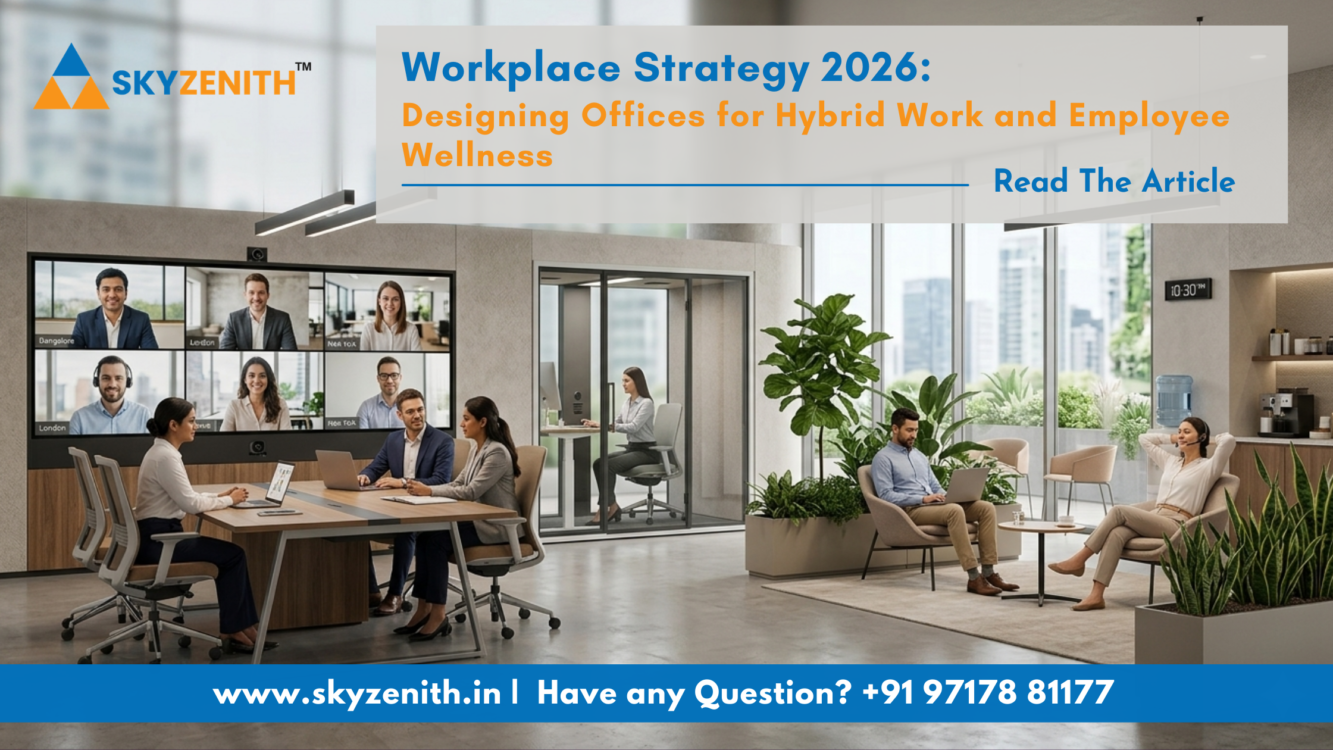
Dedicated collaboration areas encourage teamwork and innovation. These spaces often include comfortable seating, digital whiteboards, and advanced video conferencing systems.
Quiet Focus Areas
Despite the collaborative nature of hybrid offices, employees still need quiet environments for deep work. Acoustic pods and private rooms help maintain concentration without distractions.
Technology-Enabled Meeting Rooms
Hybrid work requires seamless communication between remote and in-office teams. Smart meeting rooms equipped with video conferencing systems, wireless presentation tools, and high-speed connectivity ensure effective collaboration.
Employee Wellness in Office Design: A Growing Priority
As organizations recognize the link between employee wellbeing and productivity, employee wellness in workplace design has become a key component of workplace strategy.
A healthy work environment supports physical health, mental wellbeing, and emotional balance. In 2026, offices are designed not only for efficiency but also for comfort and long-term employee health.
Natural Lighting and Biophilic Design
Exposure to natural light improves mood, reduces fatigue, and enhances concentration. Many modern offices incorporate large windows, open layouts, and indoor greenery to create a connection with nature.
Biophilic design elements such as plants, natural materials, and green walls contribute to a more calming and refreshing environment.
Indoor Air Quality and Ventilation
Clean indoor air is essential for maintaining energy levels and preventing health issues. Advanced HVAC systems, air purification technologies, and regular maintenance help maintain optimal indoor air quality.
Improved ventilation not only supports respiratory health but also enhances cognitive performance and overall workplace comfort.
Ergonomic Furniture
Ergonomic office furniture reduces physical strain and prevents long-term musculoskeletal problems. Adjustable desks, supportive seating, and flexible workstation setups allow employees to maintain healthy posture during long working hours.
Wellness Spaces
Forward-looking organizations are introducing wellness rooms, relaxation areas, and meditation spaces where employees can recharge during the workday. These areas support mental wellbeing and help reduce workplace stress.
Smart Workplace Technology for the Future Office
Technology plays a central role in shaping future workplace strategy. Digital tools and smart building systems allow organizations to manage office environments more efficiently while enhancing the employee experience.
Smart office technologies include:
- Occupancy sensors that track space usage
- Mobile applications for desk booking and meeting room reservations
- Energy-efficient lighting systems
- Intelligent climate control systems
- Integrated workplace management platforms
These technologies help organizations optimize space utilization, reduce operational costs, and provide employees with seamless workplace experiences.
In hybrid offices, technology bridges the gap between remote and in-person work, ensuring that teams remain connected regardless of location.
Creating a Culture of Collaboration and Flexibility
Beyond physical design and technology, workplace strategy for hybrid work also involves creating a culture that supports flexibility and collaboration.
Organizations must establish clear policies that define how hybrid work functions while maintaining productivity and accountability. Leaders play an important role in fostering trust and encouraging open communication among team members.
Workplace culture in 2026 emphasizes:
- Results-oriented work environments
- Transparent communication channels
- Inclusive collaboration between remote and office teams
- Continuous learning and skill development
By aligning workplace culture with modern work practices, companies can build stronger and more engaged teams.
Sustainable Office Design for Long-Term Workplace Strategy
Sustainability is another critical aspect of workplace planning in 2026. Companies are increasingly adopting green office design practices to reduce environmental impact while creating healthier work environments.
Sustainable workplace strategies include:
- Energy-efficient lighting and HVAC systems
- Use of environmentally friendly materials
- Waste reduction initiatives
- Water conservation measures
- Sustainable building certifications
These initiatives not only support environmental responsibility but also enhance corporate reputation and employee satisfaction.
The Strategic Importance of Workplace Planning
Designing an effective hybrid office requires careful planning and expert guidance. Organizations must analyze employee needs, space utilization patterns, technological requirements, and long-term business goals.
Professional workplace consulting services help companies develop tailored strategies that maximize operational efficiency while supporting employee wellbeing.
A well-planned workplace can significantly improve productivity, enhance employee engagement, and create a positive corporate culture.
SkyZenith and Its Workplace Strategy Expertise
SkyZenith provides specialized consulting and advisory services in workplace strategy, asset management, sustainability, and commercial space optimization. With a focus on future-ready work environments, the organization assists businesses in designing workplaces that align with evolving hybrid work models and employee wellness priorities. Through strategic planning, operational insights, and innovative space solutions, the firm supports organizations in improving efficiency, enhancing workplace performance, and maximizing long-term asset value. Its approach integrates modern workplace design principles, sustainability considerations, and technology-driven strategies to create dynamic and productive business environments.
Address: Unit No. 908, 9th Floor, Tower 1 DLF Corporate Greens, Sector 74A Sohna Road, Gurgaon, Haryana 122004
Email: Hemraj.dabur@skyzenith.in
Phone: +91 97178 81177