-
Skyzenith
- October 31, 2026
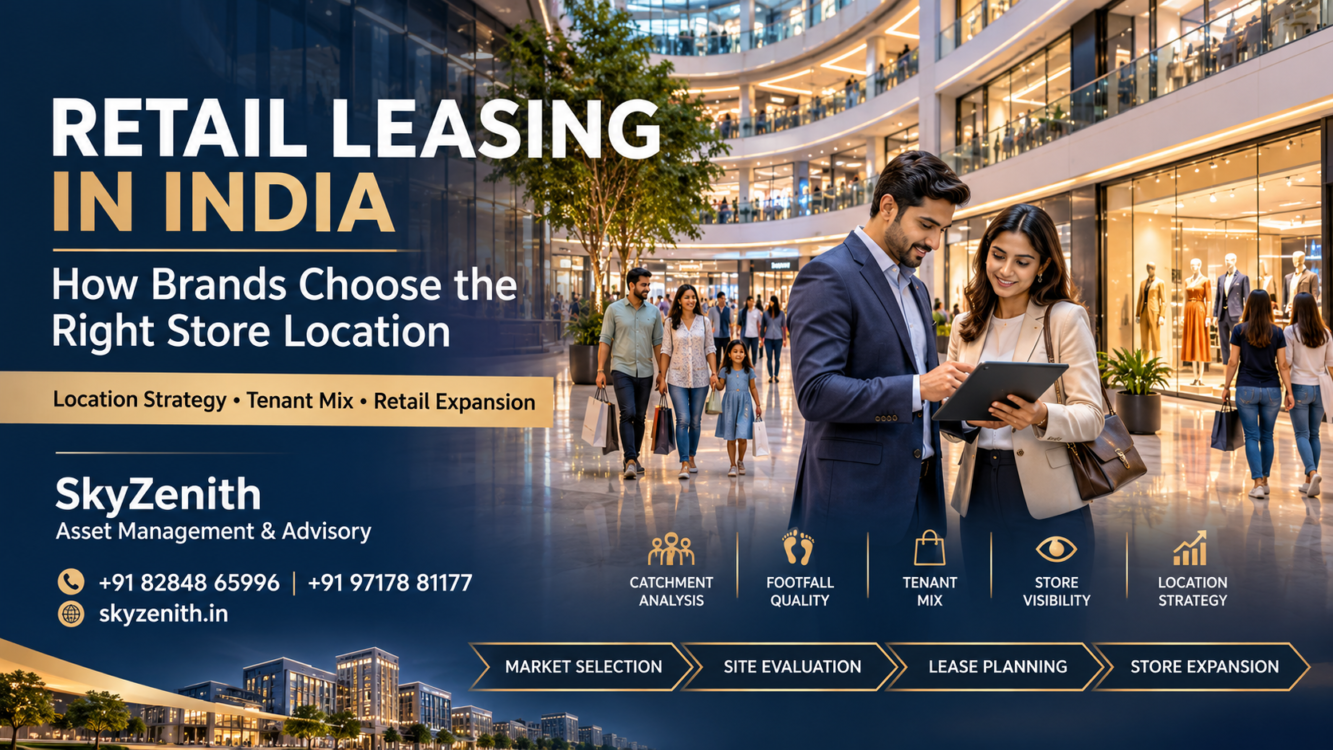
Retail Leasing in India: How Brands Choose the Right Store Location
A retail brand can have a strong product, attractive pricing and an excellent marketing strategy, but the wrong location can still limit its growth.
For a physical retail business, location influences visibility, customer access, footfall, operating costs and long-term sales potential. This is why retail leasing in India has become much more than simply finding an available shop.
Brands today need to evaluate the market, catchment, customer profile, competition, tenant mix and commercial terms before committing to a retail space.
With retail expansion continuing across major cities as well as emerging markets, selecting the right store location has become a strategic business decision.
What Is Retail Leasing?
Retail leasing is the process of securing commercial space for operating a retail store, showroom, restaurant, service outlet or other consumer-facing business.
The space may be located in:
- Shopping malls
- High streets
- Commercial developments
- Mixed-use projects
- Standalone retail buildings
- Neighbourhood retail centres
However, the availability of space does not necessarily make it a suitable location.
The right retail property should support the brand’s target customer, store format, investment capacity and expansion objectives.
Why Location Matters in Retail Leasing
Two stores belonging to the same brand can perform very differently even within the same city.
The difference may come from catchment demographics, accessibility, visibility, nearby businesses, competition or customer movement.
A good retail store location strategy therefore evaluates several factors together.
These include:
Catchment area: Who lives, works and spends money around the property?
Visibility: Can customers easily notice the store?
Accessibility: Is the location convenient by road and public transport?
Footfall quality: Is the traffic relevant to the brand’s target customer?
Competition: Are competing brands already present?
Tenant mix: Do neighbouring businesses complement the brand?
Commercial viability: Can projected sales support the overall occupancy cost?
The objective is not simply to find a busy location. It is to find a location where the right customers are likely to engage with the brand.
Mall Leasing vs High-Street Retail
Brands often have to decide between a mall and a high-street location.
A mall can provide structured customer traffic, established retail infrastructure, parking, entertainment and complementary brands. A high street can offer strong visibility, direct frontage and access to established local customer bases.
Neither format is automatically better.
The decision depends on the brand category, target customer, store format and business model.
For example, a premium lifestyle brand may benefit from being positioned alongside complementary premium retailers, while a convenience-oriented business may prioritise accessibility and repeat local demand.
Tenant Mix and Retail Store Performance
Tenant mix is particularly important in shopping malls.
The neighbouring brands can influence customer expectations, traffic patterns and the overall positioning of a retail zone.
A well-planned tenant mix strategy can create complementary shopping journeys by bringing together categories such as fashion, beauty, food and beverage, lifestyle, entertainment and services.
Brands should therefore evaluate not only the individual retail unit but also the commercial ecosystem around it.
Understanding Retail Lease Terms
Selecting the right location is only one part of successful retail leasing.
The commercial structure of the lease can have a major impact on store profitability.
Depending on the property, brands may need to evaluate:
- Base rent
- Revenue-sharing arrangements
- Common-area maintenance charges
- Security deposit
- Lock-in period
- Rent escalation
- Fit-out period
- Possession conditions
- Signage rights
- Exit and renewal provisions
These terms should be evaluated against realistic store-level revenue expectations rather than viewed independently.
A location that looks attractive at first may become commercially challenging if the overall occupancy cost is too high for the expected sales.
Retail Expansion Strategy Across India
For brands planning multiple outlets, retail leasing should form part of a wider retail expansion strategy.
Instead of selecting cities one at a time, businesses can evaluate markets according to growth potential, customer demand, competition, real estate availability and brand positioning.
India’s retail expansion is also moving beyond traditional metropolitan markets, with growing interest in Tier-2 and other emerging cities.
This creates opportunities for brands, but each market needs its own location assessment.
A successful strategy may involve testing one market, understanding customer response and then developing a wider regional or pan-India rollout plan.
How Retail Leasing Advisory Helps Brands
Professional retail leasing advisory can bring structure to the location-selection process.
Instead of starting with available properties, the process can begin with the brand’s requirements.
These may include:
- Target customer
- Preferred city and micro-market
- Store size
- Investment range
- Brand positioning
- Required visibility
- Preferred mall or high-street format
- Expected sales potential
- Expansion timeline
Potential locations can then be evaluated against these criteria.
This approach helps brands connect real estate decisions with their wider commercial strategy.
Choosing a Retail Leasing Company in India
A retail leasing company should ideally understand more than property transactions.
Brands benefit from an advisory approach that combines market research, location strategy, tenant mix analysis, leasing, commercial evaluation and expansion planning.
The focus should be on finding locations that support sustainable business performance rather than simply closing deals.
SkyZenith: Retail Leasing and Expansion Advisory
SkyZenith Asset Management & Advisory provides retail leasing and commercial real estate advisory for brands, developers, property owners and investors across India.
Its capabilities include retail space leasing, market research and analysis, tenant mix planning, space optimisation, lease negotiation and execution, post-leasing support, location strategy, mall advisory, retail asset management, commercial leasing, fit-out management and project management.
Its integrated approach connects location strategy, retail planning, leasing and long-term asset considerations, helping clients evaluate opportunities from both the property and business perspective. The focus is on data-informed decisions, suitable market positioning and commercially sustainable retail expansion rather than treating leasing as a standalone transaction.
Contact SkyZenith
SkyZenith Asset Management & Advisory
Unit No. 908, 9th Floor, Tower 1, DLF Corporate Greens, Sector 74A, Sohna Road, Gurgaon, Haryana 122004
Email: Hemraj.dabur@skyzenith.in
Phone: +91 97178 81177
Website: skyzenith.in
Conclusion
The right retail location can become a powerful growth asset for a brand. The wrong one can create high costs without delivering the expected customer response.
That is why retail leasing in India should be approached as a strategic business decision.
By combining market research, location analysis, tenant mix evaluation, commercial planning and long-term expansion strategy, brands can make more informed decisions about where to open their next store and how that location can contribute to sustainable growth.