-
Skyzenith
- November 17, 2026
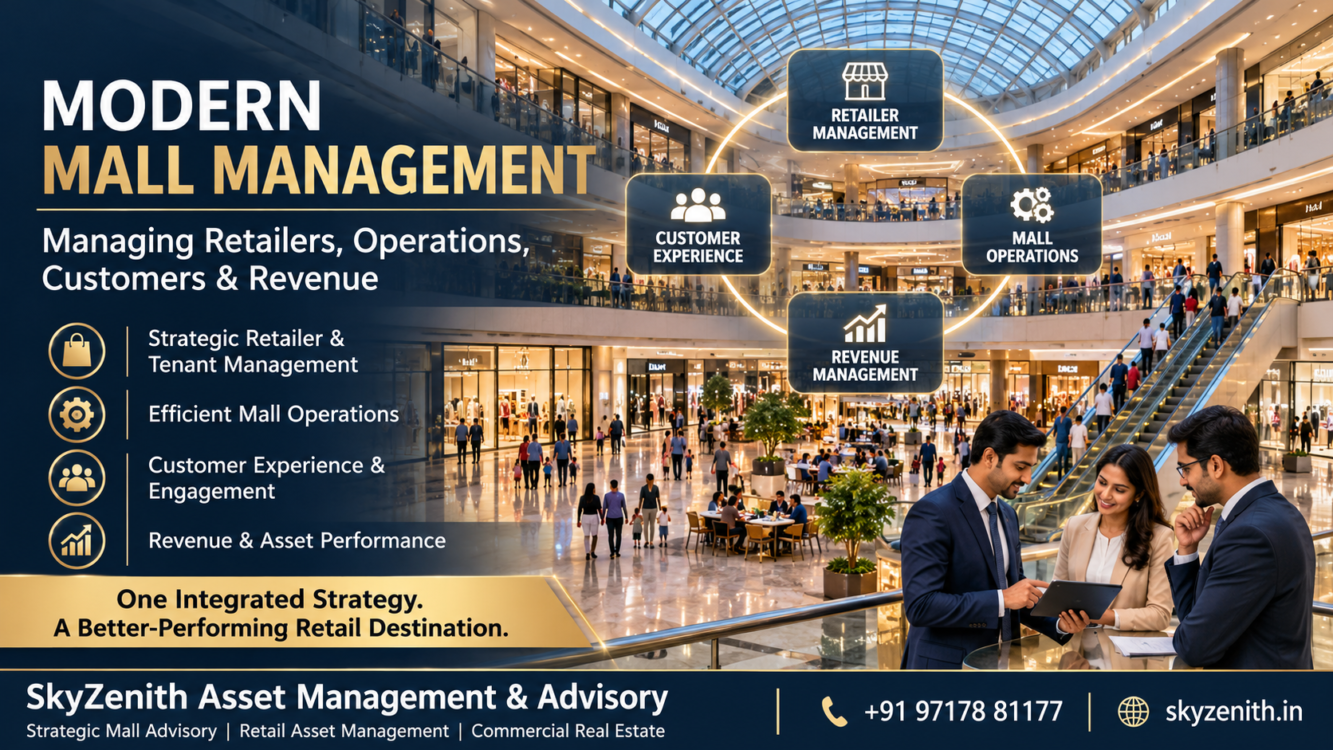
Modern Mall Management: Managing Retailers, Operations, Customers and Revenue
A shopping mall can have an impressive location, attractive architecture and well-known retail brands, yet still struggle to achieve its commercial potential. Empty spaces, inconsistent customer experiences, operational inefficiencies and declining retailer performance can gradually affect its reputation and financial returns.
The difference between an ordinary shopping centre and a successful retail destination often lies in how effectively it is managed.
Modern mall management goes far beyond maintaining a property or collecting rent. It requires a coordinated strategy that connects retailers, customers, daily operations, marketing, leasing and revenue management. Every element must contribute to a consistent experience while supporting the long-term commercial performance of the asset.
What Is Modern Mall Management?
Modern mall management is the strategic planning and coordination of a shopping centre’s commercial, operational and customer-facing activities. It aims to create a retail environment where businesses can perform effectively, visitors enjoy a convenient experience and property owners achieve sustainable returns.
A professional mall management strategy considers the entire property as an interconnected business ecosystem. Retail leasing influences tenant mix, tenant mix affects customer attraction, customer experience influences repeat visits, and operational efficiency contributes to the overall value of the asset.
The objective is not simply to keep a mall occupied. It is to make the property relevant, competitive and commercially productive.
Retailer and Tenant Management: Building a Strong Retail Ecosystem
Retailers are among the most important stakeholders in a shopping mall. Their performance directly influences the property’s commercial identity, customer appeal and rental income.
Effective tenant management begins with selecting brands that complement the mall’s positioning and match the preferences of its target audience. Fashion, electronics, supermarkets, entertainment, restaurants and lifestyle services should be considered as part of a balanced tenant mix rather than independent leasing opportunities.
Strategic Tenant Mix and Retail Leasing
A well-planned tenant mix gives customers more reasons to visit and spend time within the property. Anchor brands can attract visitors, while complementary retailers and service providers encourage customers to explore additional categories.
Mall management should regularly review occupancy levels, category distribution, store performance, lease conditions and upcoming vacancies. Retailer requirements, market demand and changing consumer preferences should guide leasing decisions.
Strong Mall-Retailer Relationships
Successful mall management treats retailers as business partners. Regular communication, transparent operating guidelines, timely issue resolution and coordinated promotional activities help create a productive relationship.
Retailer feedback can also reveal practical opportunities to improve store visibility, customer movement, delivery arrangements and common-area services. When management and tenants work towards shared commercial objectives, the entire property benefits.
Mall Operations Management: Maintaining Efficient Daily Performance
Behind every successful customer experience is a well-coordinated operational system. Cleanliness, security, maintenance, parking, utilities and building services influence how visitors perceive a shopping destination.
Professional mall operations management ensures that these functions work together consistently.
Facility Management and Maintenance
Regular inspection and preventive maintenance help maintain lifts, escalators, electrical systems, air conditioning, lighting, fire safety equipment and other essential infrastructure.
Unplanned breakdowns can disrupt business operations and affect customer confidence. A structured maintenance programme helps identify potential issues before they become major operational concerns.
Security, Safety and Housekeeping
A safe and hygienic environment is fundamental to customer satisfaction. Mall management must coordinate security teams, emergency response procedures, housekeeping, waste management and statutory safety requirements.
Special attention is necessary during weekends, festivals, promotional events and other periods of high footfall, when operational demands increase.
Customer Experience Management: Turning Visitors into Repeat Customers
Customers visit modern shopping malls for more than shopping. Dining, entertainment, social interaction, convenience and family activities have become important parts of the retail experience.
A successful mall should make the complete customer journey comfortable, from arrival and parking to navigation, shopping, dining and departure.
Improving Customer Convenience
Clear signage, accessible entrances, organised parking, clean washrooms, comfortable common areas and efficient vertical circulation contribute to a positive experience.
Food courts, entertainment zones, family facilities and recreational spaces can also strengthen the property’s appeal to different customer groups.
Customer Feedback and Engagement
Mall management should actively monitor customer feedback through surveys, service desks, digital platforms and social media. Recurring complaints can highlight problems that may otherwise remain unnoticed.
Seasonal events, promotional campaigns, loyalty initiatives and community activities can encourage repeat visits. However, these activities should reflect the mall’s target audience and commercial positioning rather than being organised simply to generate temporary attention.
Mall Revenue Management: Improving Commercial Performance
Revenue management is one of the most important responsibilities in modern shopping mall operations. Rental income remains a major revenue source, but the commercial potential of a retail property extends beyond fixed leasing arrangements.
Management should evaluate how effectively each space contributes to overall asset performance.
Optimising Rental Income and Occupancy
Lease structures, market rental benchmarks, tenant sales performance and vacancy periods should be reviewed regularly. Leasing decisions should balance rental expectations with the long-term value of retaining suitable retailers.
Underutilised areas may offer opportunities for pop-up stores, kiosks, promotional installations, seasonal retail or temporary brand activations.
Using Data for Better Decisions
Footfall patterns, occupancy levels, tenant sales reports, customer feedback and campaign performance can help management understand how the property is performing.
Rather than relying entirely on assumptions, data-led decisions can identify underperforming zones, improve space allocation and support more informed leasing strategies.
Technology and Smart Mall Management
Technology is becoming an important part of modern shopping mall management. Digital visitor information, parking management systems, building automation, energy monitoring and customer communication platforms can improve operational visibility and convenience.
Smart building solutions can help management monitor infrastructure performance and identify opportunities to optimise resource consumption. Digital platforms can also support retailer communication, promotional campaigns and customer engagement.
Technology delivers the greatest value when it addresses practical operational or customer needs and supports measurable improvements.
The Importance of an Integrated Mall Management Strategy
Retail leasing, facility operations, customer experience and revenue management should not function as disconnected departments. Their decisions influence one another.
For example, introducing a new entertainment tenant may increase weekend footfall, but it may also require additional parking management, housekeeping and security arrangements. Similarly, changing the tenant mix can improve the property’s positioning but may require adjustments to marketing, customer circulation and leasing strategy.
An integrated approach helps mall owners identify these connections and make decisions that support the performance of the entire asset.
Modern Mall Management and Advisory Services by SkyZenith
SkyZenith provides strategic real estate and commercial property advisory services, including mall management and advisory, retail asset management, retail and commercial leasing, location strategy, project management, fit-out advisory, hotel leasing, smart building solutions, building audits, sustainability advisory, workplace and occupancy planning, and experience and club management. Its integrated approach connects property strategy, tenant requirements, space utilisation, operational planning and customer experience rather than treating them as separate activities. This enables mall owners, developers, investors and retail businesses to evaluate opportunities, address performance challenges and build commercially effective, experience-led retail environments.
Contact SkyZenith
Address: Unit No. 908, 9th Floor, Tower 1, DLF Corporate Greens, Sector 74A, Sohna Road, Gurgaon, Haryana 122004
Phone: +91 97178 81177
Email: Hemraj.dabur@skyzenith.in