-
Skyzenith
- April 22, 2026
Why 2026 is the Year to Revamp Your Mall’s Experience Services
The Quiet Crisis in India’s Shopping Malls
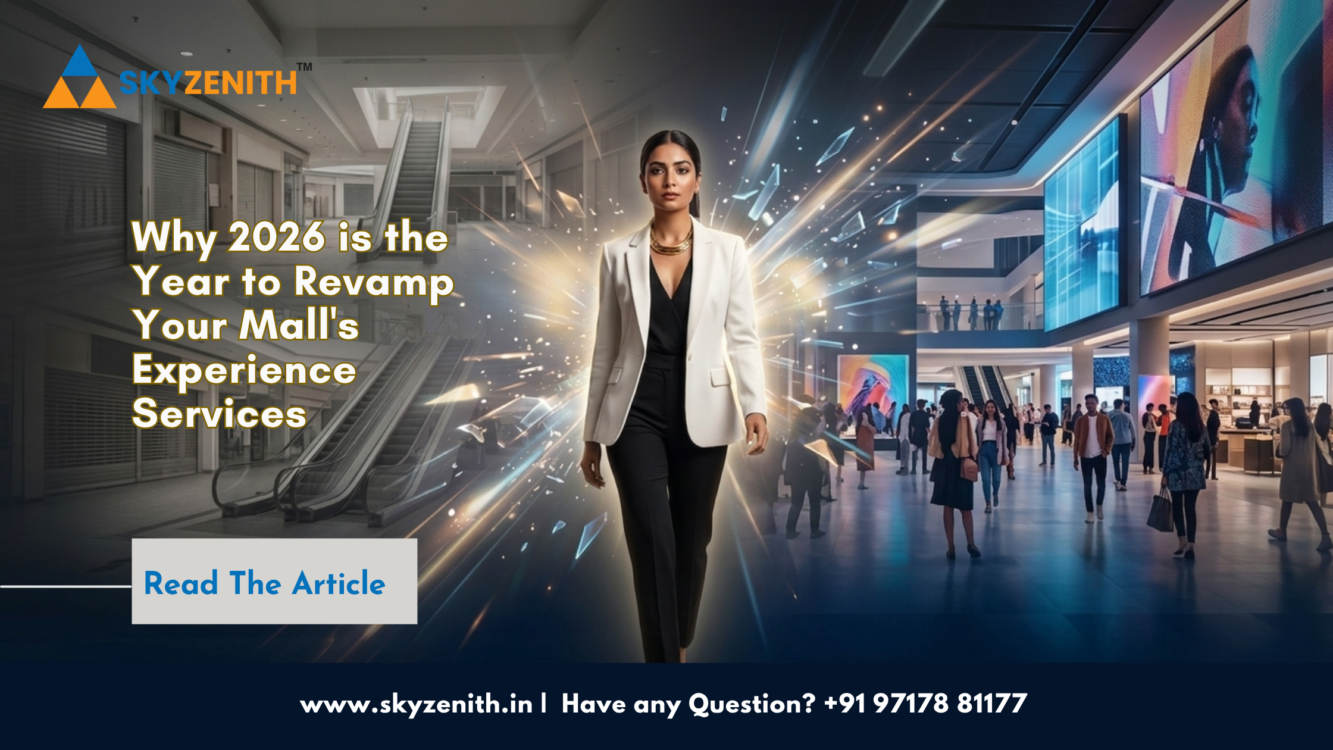
Once upon a time, not long ago, the Indian shopping mall was a temple of aspiration. Families dressed up to visit, teenagers gathered for their first unsupervised outings, and the mere act of walking through air-conditioned corridors felt like a luxury. That era, however, is fading faster than most mall operators care to admit. The year 2026 is not merely another calendar milestone; it is a tipping point. The traditional model of leasing square footage to retail brands is dying, suffocated by e-commerce giants and shifting consumer psychology. What stands at the precipice is not the mall itself, but its soul: the experience services that once drew crowds are now woefully outdated. This article explores why 2026 is the year to revamp your mall’s experience services, and how the smartest developers are transforming concrete boxes into community destinations.
The Experience Economy Has Evolved: Why Old Formulas No Longer Work
For nearly two decades, Indian malls relied on a simple formula: anchor stores, a multiplex, a food court, and a kids’ play area. That formula worked when the alternative was crowded bazaars or standalone shops. But today, the average urban Indian consumer has unlimited options. With a smartphone, they can buy anything, from groceries to luxury goods, without leaving their sofa. What the mall offers that Amazon cannot is sensory immersion, the smell of fresh coffee, the sound of live music, the joy of discovering an art installation, the warmth of human interaction. However, most malls have allowed these experiential elements to stagnate. The same tired food court, the same noisy arcade, the same uncomfortable seating. In 2026, consumers are not just bored; they are actively hostile to spaces that waste their time. They seek curated, memorable, shareable moments. If your mall’s experience services feel like they were designed in 2015, you have already lost the next generation of shoppers.
Why 2026 Is the Inflection Point for Mall Revitalization
Several converging forces make 2026 uniquely critical for mall reinvention. First, the post-pandemic settling period is complete. Consumers have fully returned to physical spaces, but with heightened expectations for hygiene, personalization, and value. Second, a new demographic cohort, Gen Z and younger millennials, now commands significant spending power. This cohort values experiences over possessions and will travel across the city for an Instagram-worthy event or a unique dining concept. Third, commercial real estate leases signed before 2020 are expiring, giving mall operators unprecedented leverage to renegotiate tenant mixes and reclaim common areas for experience zones. Finally, technology has matured to the point where immersive installations (augmented reality walls, sensor-based interactive floors, AI-driven personal shopping assistants) are cost-effective for mainstream adoption. Waiting beyond 2026 means surrendering prime market share to competitors who act now.
The New Pillars of Mall Experience Services
A successful revamp in 2026 does not mean simply adding a climbing wall or a virtual reality booth. It requires a holistic reimagining of how a visitor moves through the space. The most forward-thinking malls are adopting four interconnected pillars:
- 1. Hyper-Local Cultural Programming: Generic events no longer attract footfall. Instead, malls are becoming curators of local art, music, and food. A mall in Bangalore might host a Carnatic fusion night; a mall in Kolkata could feature a pujo-themed storytelling session. This creates emotional ownership.
- Blended Retail-Learning Spaces: Parents are desperate for productive outings. Malls that offer short workshops (pottery, coding, baking) alongside children’s play areas see higher dwell time and increased food and beverage spend.
- Wellness as an Anchor: The pandemic permanently elevated health consciousness. Malls are now integrating yoga decks, walking tracks with air quality monitors, meditation pods, and even walk-in health checkup kiosks.
- Seamless Phygital Integration: Shoppers want to browse in person, order via app, and have items delivered to their car or home. Experience services must bridge the digital and physical seamlessly.
The Financial Case for Revamping Now
Some mall owners hesitate, citing renovation costs. But the data tells a different story. According to industry analyses, malls that invest at least 5–10% of their annual revenue into experience upgrades see a 20–30% increase in footfall within twelve months, with a corresponding rise in per-visit spending. Conversely, malls that defer maintenance and experience innovation suffer from the “death spiral”: declining footfall leads to tenant underperformance, which leads to rent defaults, which leads to reduced maintenance budgets, which accelerates decline. In 2026, the cost of inaction is far higher than the cost of transformation. Moreover, government initiatives to revitalize urban consumption hubs, including various state-level entertainment tax incentives for multiplex and event spaces, make 2026 an opportune year to leverage financial support.
Case Study in Transformation: What Works on the Ground
Consider a mid-sized mall in the National Capital Region that was facing 40% vacancy in early 2025. Rather than slashing rents, the management converted an underperforming wing into a “discovery zone”, a rotating series of pop-up markets, art exhibits, and live performance spaces. They replaced half the food court seating with communal farm tables and added a small stage for open mic nights. Within six months, footfall doubled on weekends, and adjacent retail tenants reported a 25% sales lift. The lesson is clear: consumers will drive across town for a unique experience, but they will not show up for the same old food court and multiplex.
How to Begin Your Mall’s Experience Revamp in 2026
Revamping a mall’s experience services is not a single project; it is a strategic pivot. The first step is conducting a comprehensive experience audit: map every touchpoint from parking to restroom to seating to event calendar. Identify the top three pain points for your current visitors (long lines, lack of seating, poor wayfinding, etc.) and address those immediately. Next, allocate a dedicated budget and team for experience innovation, not as a line item under maintenance, but as a core operational function. Third, partner with specialists in experiential design, from sensory branding experts to interactive technology integrators. Finally, communicate your transformation aggressively through social media and local influencers. People need to know that your mall is new again.
The Risks of Delaying Beyond 2026
The window of opportunity is narrower than it appears. Competing malls in every major Indian city are already planning their 2026 revamps. Early movers will capture the “novelty premium” and build loyalty among younger demographics. Late movers will be left fighting over price-sensitive tenants and the dwindling footfall of older consumers. Furthermore, as remote and hybrid work patterns stabilize, weekday mall traffic has permanently shifted. The only way to recover weekday revenues is to offer compelling daytime experiences, co-working lounges, parent-toddler programs, lunchtime wellness classes, that bring people in during off-peak hours. Delaying these investments until 2027 or later means accepting two more years of declining performance.
Conclusion: From Shopping Center to Community Heart
The mall of 2026 cannot be merely a collection of stores. It must be a third place, a living room for the community, a stage for culture, a sanctuary from the chaos of urban life. The brands inside your mall will come and go, but the experience services you build will define your property’s value for the next decade. The question is not whether to revamp, but whether you will lead or follow. The year 2026 is your moment. Seize it.
About the Company
SkyZenith is a specialized advisory and implementation firm dedicated to transforming commercial real estate assets through innovative experience design, facility optimization, and strategic tenant engagement. The company provides end-to-end services including mall experience audits, footfall analytics, common area revitalization planning, and technology integration for interactive consumer touchpoints. Headquartered in Gurgaon, SkyZenith works with mall owners, retail developers, and facility managers across India to create differentiated, memorable, and revenue-generating visitor experiences. Their unique selling proposition (USP) lies in combining data-driven insights with creative placemaking, ensuring every revamp project delivers measurable increases in dwell time, tenant satisfaction, and property valuation. By focusing on human-centric design and operational excellence, SkyZenith helps malls transition from obsolete retail boxes to vibrant community destinations.
Address
Unit No. 908, 9th Floor, Tower 1, DLF Corporate Greens, Sector 74A, Sohna Road, Gurgaon, Haryana 122004
Email: Hemraj.dabur@skyzenith.in
Phone: +91 97178 81177